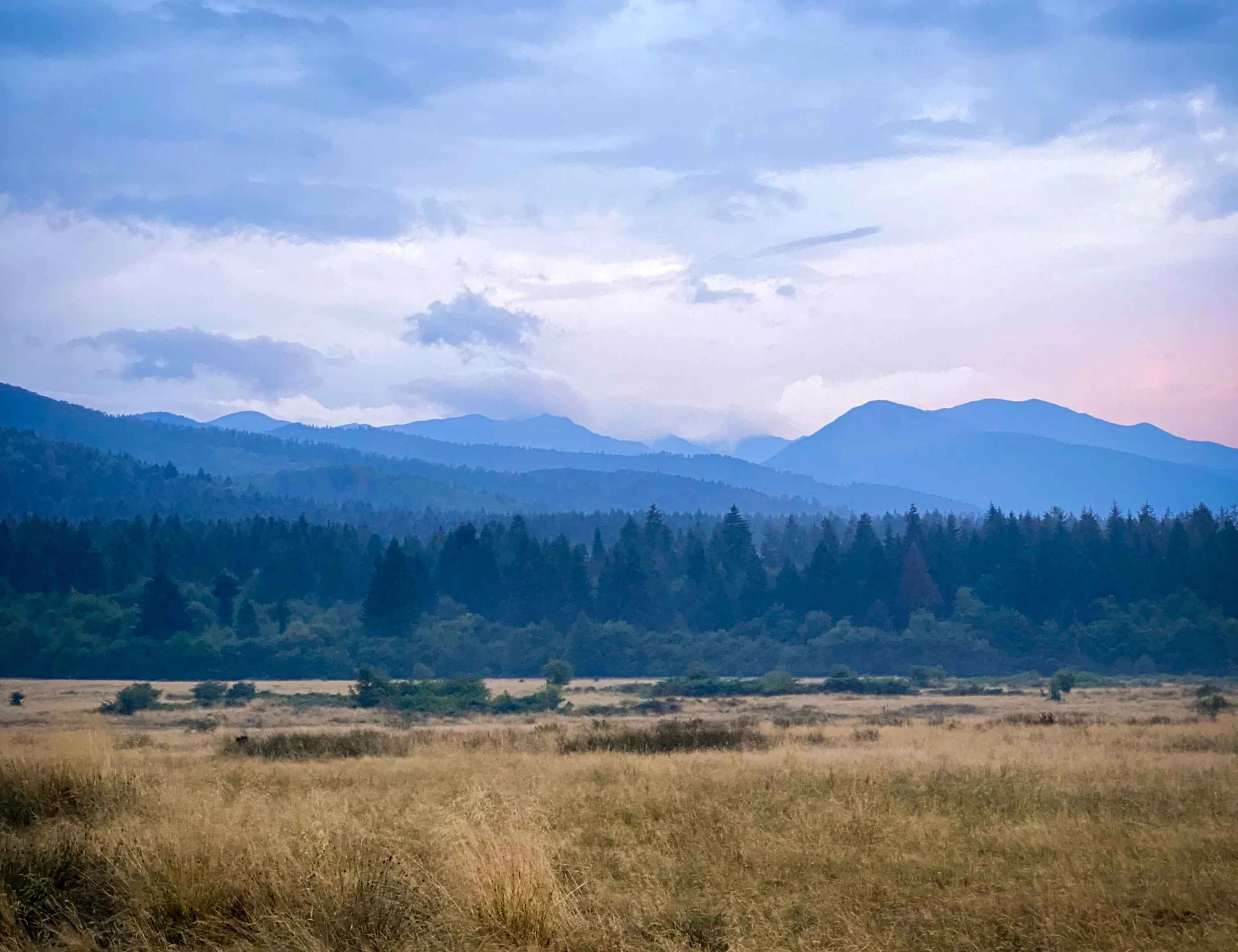
South of Recea, near Berivoi Monastery. A community shaped by faith, with a calling to learn, live, and serve.
The name we carry
Beri+Voj
A meaning of Berivoi“Distinguished in battle.”
Rooted in history. Preparing for eternity.
The name Berivoi connects this place with a much older story.
One interpretation of its Slavic roots carries an idea that speaks to us today: being distinguished in battle.
The name echoes the courage of earthly battle. For us, it inspires preparation for spiritual battles: growing in faith, character, and service, ready to stand with Christ in the Great Controversy.
Făgărașul Tău
The village history traces the name to the Slavic personal name Borivoj, suggesting Borti (“battle”) or Ber (“to take”), joined with i (“and”) and Voj (“soldier” or “warrior”).
These warrior roots are echoed in Alexandru Ionuț Cruceru’s study, which records an interpretation of Berivoj as the Old Slavonic Beri + Voj, meaning “distinguished in battle.”
Before there was an Outpost, there were villages beside the rivers, places of prayer along the forest edge, and generations whose lives were shaped by faith. The monasteries of Berivoi, Dejani, Bucium, and Sâmbăta preserve part of that inheritance: communities established for worship, interrupted by destruction, remembered, and eventually rebuilt.1234
Berivoi Outpost is south of Recea, near Berivoi Monastery, in the foothills of the Făgăraș Mountains. The village of Berivoi and its historical settlements belong to the wider region whose story we explore here.
Explore the full historyClose the full historyVillages, monasteries, faith & conscience
The neighboring valleys reach toward the ridge like fingers, connecting village life with fields, forests, and mountain paths. Recea, Dejani, Lisa, Sâmbăta de Jos, and Sâmbăta de Sus are part of our everyday surroundings. Lisa is also where we attend church, making this landscape part of our shared life as well as our interest in the past.
To know Berivoi is to begin discovering the religious heritage around it: the faith expressed in churches and homes, the traditions carried between generations, and the struggles over worship and conscience that have left their mark on the region.
Berivoi: a village, a river, and a remembered monastery
Berivoi’s documented history reaches back to 1486, when a local leader named Radol de Berowu appears in the historical record. For centuries, the river divided two neighboring settlements, Berivoii Mari and Berivoii Mici, which were united administratively in 1964 to form today’s village.5
By the middle of the eighteenth century, an Orthodox monastery stood near the river between wooded hills. Its destruction in 1761, during the Habsburg-era suppression of monastic establishments, interrupted an existing community of Christian worship. Yet the place remained known locally as La Mănăstiri—“at the monasteries.”1
That name carried the memory beyond the life of the buildings.
In 1992, local believers began the work of re-establishing the monastery. On 29 June 1993, the foundation stone was laid for the renewed church dedicated to the Apostle Andrew. More than two centuries after the destruction, a remembered place again became a place of gathered worship.1
The monastery’s story gives Berivoi a particular depth. Alongside the village’s written record is a history preserved in the name of a place and in the determination of later generations to rebuild.
Dejani and Bucium: faith along the forest edge
The neighboring valley of Dejani preserves another chapter of this monastic heritage. Inscriptions and notes in old church books attest to a monastery there in the seventeenth century. Its earlier buildings were modest: a wooden church on stone foundations and small dwellings set among the trees. The municipal history describes a secluded establishment reached by a mountain path.2
In June 1761, troops under General Buccow burned the church and destroyed the monastery buildings. The same account remembers local people rescuing some of its religious objects and carrying them to the parish church. Even after the establishment had disappeared, its ruins remained a place to which believers returned.2
Farther east, Bucium carries a related history. Its monastery is recorded by 1737 and was also destroyed in 1761. After 1989, people from Bucium, Șercăița, and surrounding villages were finally able to pursue its reconstruction, which began in 1990.3
These places show how religious memory can be held by an entire community. A church book, an object brought to safety, a surviving ruin, or the recollection of grandparents could help carry an interrupted history forward.
Lisa: faith woven into village life
At Lisa, religious heritage is closely connected with education, household life, and the passing of traditions from one generation to the next. The village’s municipal history records Radul de Lisza in 1527 and the establishment of a school in 1765.6
Its winter customs include children’s caroling, the organized youth groups known as cete de feciori, and Irozi, a dramatization of the biblical Nativity story. These brought religious language and biblical scenes into the shared life of the village, beyond the church building itself.78
For our community, Lisa has a present significance too. Attending church there brings us into fellowship with people whose lives are rooted in this same foothill landscape. Our relationship with the area grows through worship, conversation, friendship, and the ordinary experience of being neighbors.
That makes its history personal. We encounter this inheritance not only through old buildings, but through people who continue to make faith part of their lives.
The Sâmbăta villages: worship, learning, and religious change
The villages bearing the name Sâmbăta open another part of the region’s religious story.
Sâmbăta de Jos became connected with the early Greek-Catholic episcopate through an estate granted to support the bishopric. Its history links this countryside with the development of the Romanian Greek-Catholic Church and the movement of its institutional center toward Blaj.9
At Sâmbăta de Sus, the Brâncoveanu family established a different and enduring religious landmark. A wooden church preceded the stone church and monastery built under Constantin Brâncoveanu in the late seventeenth century. The foundation was intended to strengthen Orthodox religious life, and its history also includes teaching, religious art, and the transmission of books and learning.4
The monastery was destroyed in 1785. Restoration began under Metropolitan Nicolae Bălan in 1926, and the restored historic church was consecrated in 1946. Its collections of old books, manuscripts, icons, and religious objects preserve further traces of the world from which it emerged.4
Together, these neighboring places reveal how deeply religion became connected with education, patronage, identity, and belonging. They also preserve the consequences of religious divisions that reached into village life.
Făgăraș: many communities within one region
The religious heritage broadens again in Făgăraș itself. Alongside its Orthodox churches and Greek-Catholic history, the town preserves Lutheran, Reformed, and Roman Catholic places of worship. Its Evangelical church, Reformed church, and Franciscan complex give visible expression to different Christian communities that helped shape the town.109
The surviving synagogue adds the history of Făgăraș’s Jewish community. Built in the nineteenth century, it remains a physical witness to Jewish religious life within this same regional center.11
Each building carries a particular story: a congregation that gathered, a form of worship, a community’s understanding of Scripture, and the effort required to sustain its life across generations.
Together, they make the region’s religious diversity visible. The countryside around Berivoi belongs to a larger history in which people of different languages and confessions lived, worked, worshipped, and sought to preserve what they believed.
Older beliefs within the village calendar
Some of the region’s religious inheritance survives through customs rather than buildings.
The summer observance of Sânziene, associated with 24 June and the Christian feast of John the Baptist’s birth, preserves a particularly clear meeting of Christian observance and older folk belief. Regional accounts describe flower crowns made for members of the household and placed on roofs, together with expectations that supernatural beings would leave signs concerning the future. National ethnographic accounts also record beliefs connected with marriage, healing, and the fertility of the land.812
Here, the Christian calendar and an inherited supernatural world occupied the same occasion. The feast carried both a Christian name and beliefs about spiritual powers, protection, and foreknowledge.
This is part of the religious history of the area too: the ways communities sought reassurance about illness, harvests, marriage, and an uncertain future, and the ways those concerns became attached to religious observances.
For us, such traditions invite a careful return to Scripture. The question reaches beyond the age or familiarity of a custom to the source of spiritual authority it teaches people to trust.
Șinca Veche: worship carved into the hillside
At Șinca Veche, religious heritage takes a distinctive physical form. The rock monastery at Dealul Pleșu preserves spaces cut into the hillside itself. Romania’s National Archaeological Record identifies the remains as a monastic establishment and dates its listed component to the eighteenth century.13
Its chambers offer a striking contrast to the built churches and monastery courtyards elsewhere in the region. Here, the place of worship is encountered within the hill.
Together with the forest monasteries of the neighboring valleys, Șinca Veche gives the landscape a tangible history of religious retreat: places set apart from ordinary activity, where people made room for prayer.
Arsenie Boca and the memory of persecution
The twentieth century brought another influential religious figure into the Sâmbăta story: Arsenie Boca, the Orthodox monk, priest, and painter whose ministry became closely associated with the Brâncoveanu monastery.14
He entered monastic life at Sâmbăta in 1940, was ordained a priest in 1942, and remained associated with the community until his transfer to Prislop in 1948. His life later included arrest, imprisonment, and investigation under the Communist authorities, including detention in 1951–1952.14
His ministry and the later devotion surrounding his memory became part of the religious inheritance of the region.14
His experience also belongs to a wider history of pressure on Christian communities under Communism. Orthodox, Greek-Catholic, Catholic, and Protestant believers and institutions experienced forms of repression; the Greek-Catholic Church was suppressed in 1948, and measures against monastic life followed in 1959.15
These events bring the history closer to living memory. The questions once faced by earlier generations—how to preserve faith, how to respond to imposed religious control, and what obedience to God requires—returned in another political setting.
The history we enter
We understand this inheritance through the Great Controversy: the conflict between Christ and Satan over truth, worship, allegiance, and the character of God.
Seen through that lens, the history around Berivoi brings two concerns into focus. One is the pressure placed on conscience by religious and political power. The other is the gradual blending of revealed truth with inherited beliefs and human traditions. Ellen White addresses both the accommodation of pagan ideas within Christianity and the use of force to secure religious allegiance. The Great Controversy (GC 49.2; GC 591.2).1617
“God never forces the will or the conscience”
This principle matters deeply to us. This history calls us to value sincere devotion, to remember those who suffered, and to examine what we ourselves have inherited. It directs us toward a faith grounded in Scripture, centered on Christ, and expressed through willing obedience and love.
That is the responsibility we bring to life at Berivoi.
We want study to produce understanding, practical work to become service, and shared responsibility to develop character. We want our life together to help prepare a people for Christ’s return—people through whom His love, faithfulness, and government can be seen in everyday conduct.
The history of this region gives us roots. The life we build together is our contribution to its continuing story.
References & source notes17 sources
References
Sources behind the story
Numbered notes link the historical passages to their sources. The closing reflection expresses Berivoi Outpost’s biblical and Great Controversy perspective.
Primăria Municipiului Făgăraș Municipal history · Romanian
Eighteenth-century monastery, destruction in 1761, the name La Mănăstiri, the 1992 rebuilding initiative, and the foundation stone laid on 29 June 1993.
Primăria Municipiului Făgăraș Municipal history · Romanian
Seventeenth-century attestations in church books, the former wooden establishment, destruction in June 1761, and the preservation of objects and local memory.
Primăria Municipiului Făgăraș Municipal history · Romanian
Brâncoveanu patronage, the late-seventeenth-century stone foundation, destruction in 1785, restoration from 1926, the 1946 consecration, and religious collections.
To train soldiers to be distinguished in the Great Controversy.
We read this history through the Great Controversy: the conflict between Christ and Satan, truth and deception, love and selfishness. It calls us to honor those who suffered for conscience, test inherited beliefs by Scripture, and let God examine our own hearts. The battle associated with Berivoi’s name becomes a metaphor for faithful character. We seek to serve our neighbors with courage and kindness, and to defend their freedom of conscience.
At the center of our Adventist faith is the living Christ, our high priest and mediator. We look to Him for forgiveness and renewal, and to Scripture as the standard for what we believe and teach. Careful study helps us understand the word of truth and put it into practice. This calling takes shape in ordinary life: opening the Bible, learning useful skills, sharing responsibility, and serving others. We want young people to leave better prepared to live their faith and carry hope wherever God calls them.
Berivoi Outpost exists for more than a quieter life in the countryside. We are here to prepare for Christ’s return—and help others prepare with us.
We want Present Truth to be more than something we understand. We want it to shape our character, our relationships, and the way we serve. Bible study, practical training, country living, hospitality, and fellowship are different parts of that shared purpose: learning to reflect Christ and carry His message to the world.
“By giving the gospel to the world it is in our power to hasten our Lord’s return.”
The harvest follows ripening fruit. Christ’s Object Lessons connects this picture with Christ’s character reproduced in His people and with hastening His coming.
“To train soldiers in Christ—grounded in Present Truth, hardened by practical skill, and softened through an other-centered mindset—fully prepared to finish the work.”
Advent Center at Berivoi · Mission
What the calling asks of us
Rooted in truth.
Ready to serve.
Our language of “soldiers in Christ” is about spiritual formation: conviction, useful work, courage, and care for others.
Present Truth
Study with understanding.
Open the Bible, ask honest questions, and learn to live the faith of Jesus.
Practical skill
Learn by doing.
Develop the capability and habits that make service practical, dependable, and useful.
Other-centered living
Make room for others.
Grow in a character that listens, shares responsibility, and places care for others at its heart.
God’s original plan
Contribute to a
living demonstration.
Help make God’s government and original plan visible in everyday life. Through worship, useful work, and care for one another, we seek to demonstrate His love in practice. Bring your gifts and take part in that work at Berivoi.